Hastings had history coming out of its ears. Someone was filming one of those gritty historical dramas, and I’d stumbled through a restricted area, blacked out, and come to on the set.
That explained the buildings, the smoke, and the lack of signs. Possibly even the brooch, if the old woman had been part of some elaborate promotional stunt, though if this was marketing, somebody was getting a strongly worded letter and then sued.
Then I saw the ships. Not one or two. A whole scattered line of them beyond the surf.
They rode at anchor on the restless water, dark wooden hulls rising and falling beneath a bruised sky, square sails furled and carved prows nosed toward land. Smaller boats moved between them and the shore.

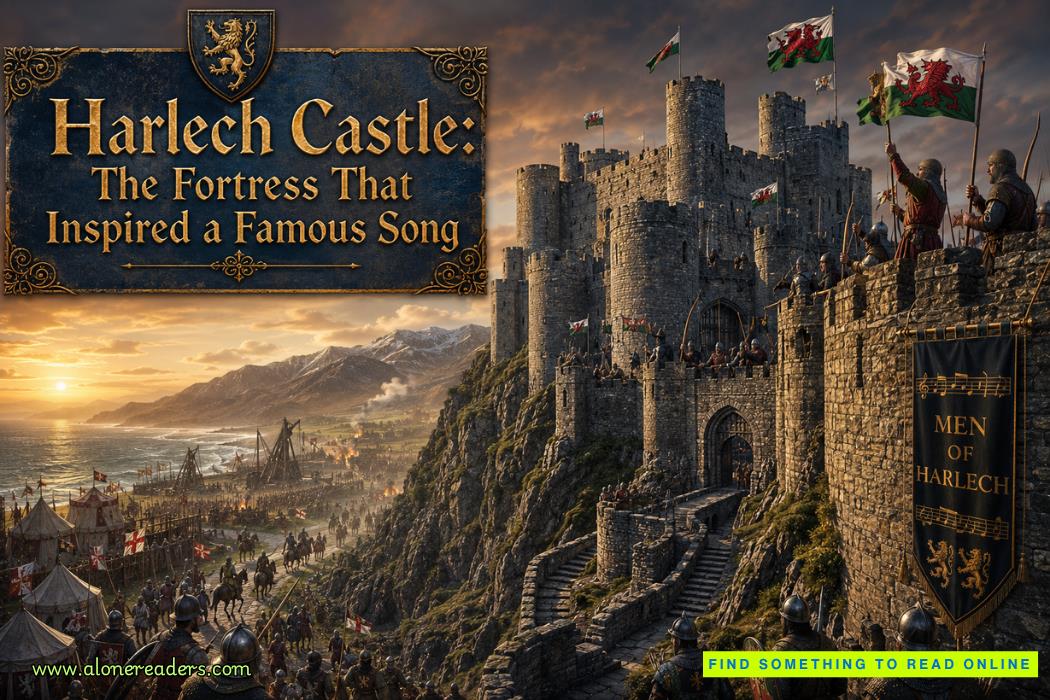
Men waded through the shallows, shouting in a language I didn’t understand. Horses screamed as they were forced downramps into the surf. Metal flashed everywhere I looked. Spears. Helmets. Mail.
Shields painted in bold colors that looked too clean and new for any museum and far too dangerous for a family day out at the seaside.
I stared. The set was enormous, too enormous. Surely nobody let horses flail about in the surf like that for television. There were rules about that sort of thing. Permits. Animal handlers. Safety coordinators with clipboards and fluorescent jackets. I saw none of them.
A horse plunged in the water and nearly flattened the two men trying to steady it. One swore loudly. Another laughed. Farther down the beach, men were unloading barrels, bundles, sacks, shields, and more weapons than any reenactment society in Britain had a right to own.
“Hello?” I called.
The wind tore my voice away.
Nobody answered, but one of the men nearest the water turned and caught sight of me. For one long breath, we stared at each other across the wind-torn beach.
He wore a conical helmet with a strip of metal running down over his nose and mail that fell to his knees. His beard was dark, his face weather-browned and hard.
His gaze traveled down over my jeans, my jacket, and my boots. Then he shouted as several men turned. And every sensible part of me grabbed the rest by the collar and screamedrun.
There was no graceful way to sprint across wet shingle in waterlogged boots while your jacket did its level best to drag you back into the sea.
Behind me, voices rose. I heard splashing, the heavy suck of boots in wet sand, the clatter of metal.
I didn’t look back. Looking back was for people in films who wanted to trip over a log and die.
Higher ground and cover, somewhere where I could find shelter. The cliffs ahead weren’t sheer, thank heaven. A rough path zigzagged up through the scrub, the kind of track used by fishermen or goats.
I hit it hard, grabbing at grass and exposed roots, my lungs burning as smoke and salt scraped down my throat.
Halfway up, I risked a look back. The two men who had started after me stopped near the base of the cliff. One pointed as the other made a sign against evil.
Well, that was comforting.
Nothing said harmless film crew quite like grown men warding off demons because they’d seen a woman in denim.
I scrambled over the crest and dropped flat behind a clump of thorny brush that immediately tried to remove my cheek.
Below, the beach spread out in terrible, impossible clarity. So many ships, men, horses, and smoke. But no cameras or generators. No vans and no director shouting cut. No bored assistants drinking takeaway coffee and regretting their life choices.




I put a shaking hand to my forehead.
“Head injury,” I whispered. “Definitely a head injury.”
Except my head didn’t hurt, my palm did. I turned my hand over. The angry red circle still marked the center of it, and when I pressed my thumb against the skin, a strange warmth pulsed beneath it.
The brooch was gone. Only the mark remained. And two words I couldn’t explain.
Find him.
“Very helpful,” I muttered.
Down below, a horn sounded and men shouted.