


We were headed in a southeasterly direction, across the narrow channelthat separated La Maddalena from Santo Stefano. As soon as we were out in the middle of the channel, the wind whipped through my hair, and I had to grab it in fistfuls so it wouldn’t blow in my face or Paul’s. We passed fishing boats and a couple of windsurfers, their sails the colors of jewels, and within minutes, we had rounded the northernmost tip of Santo Stefano.
I expected to see the submarine tender right away, but the first things I saw, tucked in a little cove, were a long dock and a huge concrete pad with a couple of cisterns, or maybe you’d call them drums? I didn’t know what they were for, but I couldn’t spend too much time trying to puzzle it out because beyond them were these futuristic tunnels or bunkers or something carved into the hillside. The whole complex, which included a couple of trailers and a guardhouse, was an eyesore—not at all what you wanted to see on an otherwise pristine Mediterranean island.
“Is that us?” I shouted at Paul over the wind, but he shook his head.
“NATO!”

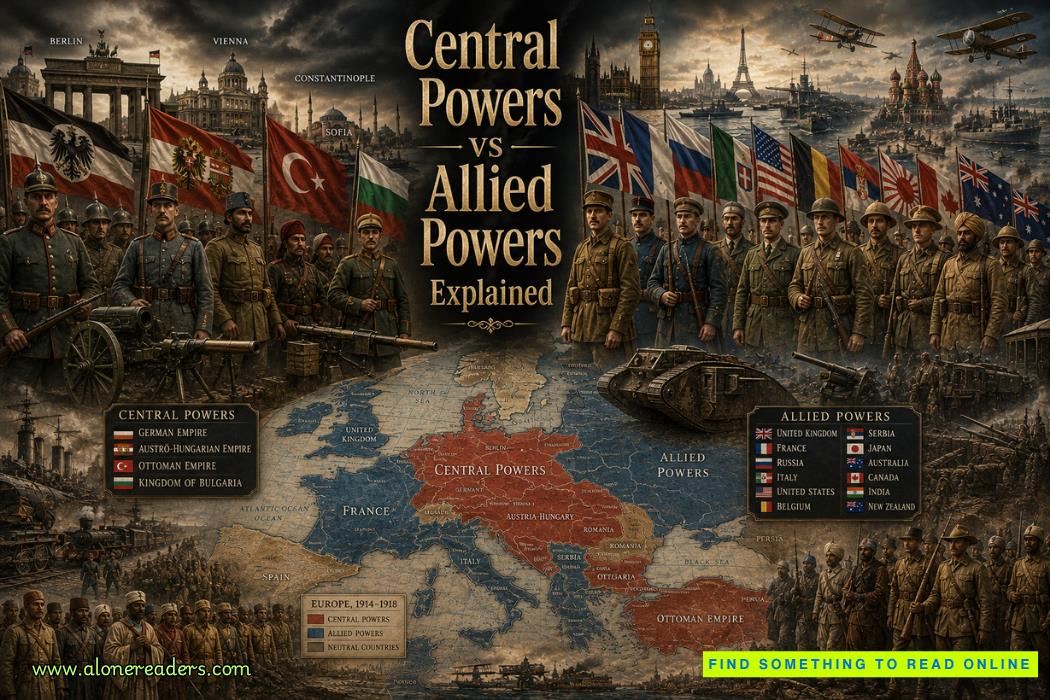
Paul had told me that Italy’s membership in NATO had been dicey at the beginning. Not only had the country picked the wrong side during World War II, but in 1948, they’d come very close to voting the Italian Communist Party into power. In the end, the election had gone to the Christian Democrats, led by Alcide De Gasperi, who had thought it wise to make nice with the Allies and petition for membership in the fledgling security alliance. My understanding is that countries like Britain and France would have greatly enjoyed telling De Gasperi where he could shove his petition, but it was a classic keep-your-friends-close-and-your-enemies-closer scenario. Italy became one of twelve founding members of NATO, and by the time Paul and I showed up in La Maddalena in 1974, there were NATO bases, training centers, and research facilities all over the country. For the most part, Italy had proved to be a cooperative and even collegial partner.
“What is all that?” I asked Paul as the whole mess slipped past us.
“Support facility,” he said, which didn’t tell me much. I’d later learn that the NATO “support facility” we were passing was actually an ammunition depot and that the bunkers housed a missile stockpile large enough to see most of Western Europe through the end times. How’s that for support?
“There she is,” said Paul, and I looked up just in time to see the U.S.S.Howard W. Gilmorecome into view.
27.
HOW TO DESCRIBE MY FIRSTGlimpse of the tender? Well, for one thing, she was a good bit smaller than I thought she’d be. I guess I’d been picturing an aircraft carrier or maybe an amphibious assault ship—whatever I’d seen going in and out of Charleston Harbor most frequently. At five hundred and twenty-nine feet long, theGilmorewas downright diminutive by comparison. She was also old, her best days very obviously behind her.
The U.S.S.Howard W. Gilmorehad been built during World War II, and after her commissioning in 1944, she’d been deployed to the Marshall Islands, where she’d repaired and resupplied American subs that were patrolling the Pacific.Patrolling the Pacificsounds sort of innocuous, so maybe I should rephrase. What the subs were really doing was taking out Japanese merchant ships as part of a blockade intended to cut Japan off from supplies. Did you know we sank more than twelve hundred Japanese vessels by the time the war was done?
In peacetime, theGilmorespent more than a dozen years in Key West, supporting submarines that were conducting training and readiness exercises. Then she headed to Charleston for an overhaul. It was 1961, and all the U.S. Navy’s newest subs were running on nuclear power, so tenders like theGilmorehad to be retrofitted with the facilities to maintain them. The overhaul was finished just in time for everything to blow up in Cuba, which meant that the tender spent the better part of the sixties in the Caribbean. There was another, more modest overhaul in the early seventies, and then it was off to La Maddalena to relieve the even older and more decrepit U.S.S.Fulton, which had arrived in the archipelago in 1972.
The submarine tender was cracked and corroded, with a lot of obsolete equipment and a list of deferred maintenance a mile long. But I felt a vague tenderness for this creaky old boat. Without her, I wouldn’t be in Italy, and Paul and I wouldn’t have gotten married. At least not yet.
I looked over at Paul, wondering if he felt the same way.
“What?” he asked.
“Nothing,” I said, and kissed his cheek.
TheGilmorewas docked at a long concrete pier that ran parallel to the shore, which technically makes it a wharf. In any case, the tender wasn’t pulled up alongside it. Picture a parking space you’ve got to back into. Her stern was flush with the pier and her bow jutted out into the open sea, so that submarines could dock along either side of her. I could already see one sub on her port side, and as we drew closer, I realized that what I was actually looking at was two subs—one right next to the other.
The liberty boat had begun to slow, which made it a little easier to talk to Paul. “What are those?” I asked, pointing to a ring of red buoys that surrounded both tender and subs.
“Nets and booms.”
I didn’t have time to ask what they were for because we were fast approaching the pier. “Stand clear,” shouted a crew member, and the next thing I knew, we’d disembarked and were tripping past theGilmore’s gangway.
Most of the women headed straight for a big metal building that I would soon learn housed the commissary and NEX, but Paul wanted to give me the full tour, so we took a less direct approach, meandering past two sets of enlisted barracks, one for Americans and another for Italians. He pointed out a gym and a bowling alley and a boathouse, and I was struck by the fact that there wasn’t one architecturally significant building on the entire site. By that, I mean there wasn’t one building with a real foundation and walls that weren’t made of either homasote or corrugated tin.
When we finally arrived in front of the commissary, Paul handed me some dollars, which already seemed unfamiliar, and told me to pick up whatever I thought we needed. I had assumed we’d shop together, but now I wondered if I’d been reading him wrong from the beginning. “You don’t want to come in?”
“I’m going to see if my division chief is over at the BEQ. He wasn’t there yesterday, and I wanted to introduce myself.”




I didn’t argue, but as I wandered the tiny aisles of that very sad excuse for a grocery store, I could feel myself growing more and more resentful. I hadn’t even wanted to go grocery shopping, so what was I doing in thiswindowless room, which smelled of rotten produce and expired milk, on a perfectly good Saturday?
The beach would have been a distraction, proof that I was on vacation. But the commissary was real life, and a stark reminder that I now lived on a remote island and would not be returning home anytime soon. In the condiments aisle, I saw a familiar jar of Jif on a shelf and reached for it. I didn’t even particularly like peanut butter, but I tossed it in my cart anyway.
28.
LATER THAT AFTERNOON,while Paul napped, I wandered over to Bar Sanna, where we’d been told we could place international calls. I knew I couldn’t afford to talk for long, but I wanted to tell my parents we’d made it to La Maddalena in one piece and that, before too long, a letter would follow.
Like a lot of bars in Italy, Bar Sanna had ornate wood paneling; a mirrored backsplash lined with shelves of pretty liquor bottles; and glass cases full of fruit crostatas and chocolate tarts. On the long marble counter sat a gleaming La Marzocco espresso maker next to a stack of tiny white cups and saucers. All of this was verynormale, but what set Bar Sanna apart was the bank of telephone bays that ran along the far wall.
Bar Sanna was officially a posto pubblico, which meant that the bar had been authorized by the phone company to operate a public telephone switchboard. According to Tom, we could make calls there every day of the week except Tuesday, when, for some reason, we had to go to Bar Shanghai instead.
I stood in a short line (ahead of me, two German tourists agonized over the pastry case), and when I got to the counter, I used my phrase book to make my request: “Voglio telefonare negli Stati Uniti, per favore.” The woman on the other side of the counter nodded ferociously and, in a voice at least three times louder than it needed to be, said something I didn’t understand. When she realized that I had no idea what she was saying, she gestured toward the end of the bar, where there were these little slips of paper and some pens.



