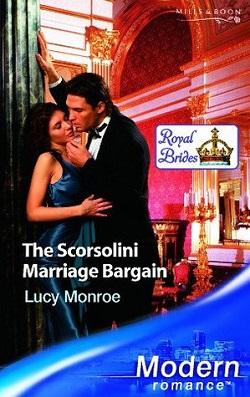
MacKenzie drew back and struck again. His face was contorted now, not merely with rage but with the desperate, ugly malice of a man denied his prey. Duncan met him once more, driving him away from her by the sheer violence of his defense. There was scarcely room to fight properly, because the canvas walls billowed with every movement, while the ground beneath them was uneven with trampled rugs and scattered gear.
A single misstep would be enough, a single opening, a single delayed breath.
Duncan did not give him one.
“Get away from her,” he growled, and his voice was so cold, so full of death, that even MacKenzie seemed to feel it.




Yet the older man only smiled in a hideous baring of teeth with hatred behind it.
“Ye should have come sooner,” he spoke, sounding amused.
The words were meant to wound, and they did. Duncan felt them like a blade between the ribs. But he did not answer. Speech was too small a thing now. What stood between them had gone beyond threats, beyond old vengeance, beyond even war. MacKenzie had taken what Duncan loved and meant to kill her before his very eyes.
There would be no mercy in what followed.
He shifted his stance, placing himself more firmly between them, making of his own body a barrier as absolute as any wall of stone. No man would touch her while he stood. And MacKenzie, seeing at last that he would have to go through Duncan to reach her, raised his sword again.
The tent seemed too small to contain the violence of it. Steel struck steel with a force that shook the very air. McKenzie fought like a man with nothing left to preserve but his hatred, and his scarred face twisted into something so ugly with rage that it scarcely looked human. He was older, but there was nothing diminished in the savagery of him. He drove at Duncan with the blind ferocity of desperation, each strike meant not merely to wound, but to destroy.
Duncan gave ground only once, and only because the space allowed him no choice. His shoulder struck one of the tent poles hard enough to jar the breath from him, but he recovered at once, turning the next blow aside with a movement so sharp it sent sparks skidding from the blades. Elaina gasped. He heard her behind him and that sound did what no fury could have done.
MacKenzie lunged again. Duncan caught the strike, twisted, and drove him backward. The older man stumbled over a fallen stool, righted himself, and came on with a curse, slashing low. Duncan blocked, then struck once across Lachlan’s arm, drawing blood. It only made him madder. He came again, more recklessly now, his sword-work losing precision beneath the weight of his temper.
That was his mistake. Duncan saw the opening in the next instant. MacKenzie overreached, driving forward with all his strength, meaning to break through by sheer force. Duncan shifted aside, caught the blow, and turned it with brutal efficiency. Lachlan’s balance faltered for half a heartbeat, but it was enough.
Duncan struck. The blow went in hard. MacKenzie jerked, and the fury in his face broke first into shock, then into a hideous disbelief, as though he could not comprehend that death had at last found him. For one suspended instant, he remained standing, his pale eyes fixed on Duncan’s face with all the hatred of years burning uselessly within them.
Then he fell. The sound of his body hitting the ground was dull and heavy, and with it the last true threat to Elaina’s life ended.
Duncan stood over him only long enough to be certain that Lachlan MacKenzie would not move again.
A MacKenzie soldier entered the tent, took in the scene, and ran out again shouting “Our laird is dead!”
Outside, the noise of fighting altered almost at once. Resistance, already faltering, now gave way in earnest. Men shouted in confusion. One voice called for retreat. The remaining force, such as it was, broke under the news. In the space of a few moments, the camp that had seemed so dangerous was no more than a scattering of frightened, leaderless men being overtaken by clan Grant.
But Duncan scarcely heard any of it. He turned from MacKenzie’s body at once and went to Elaina. She was still bound to the post, pale and trembling, and her eyes were wide upon him in a face so dear that for a moment his own breath failed. There was soot upon her cheek, and her hair had gotten loosened and disordered. But it was the sight of the rope at her wrists that filled him with such renewed fury that he had to master it before touching her.
“Elaina,” he whispered, and his voice broke on her name.
He sheathed his sword with a shaking hand and reached for the bonds at once, cutting them free with more haste than care. The rope fell away. She swayed the instant she was released, and he caught her before she could fall, his hands going to her arms, her shoulders, her face as though he had to assure himself by touch that she was truly there, alive and not some cruel trick of hope.
“Are ye hurt, me love?” he asked in a single breath. “Did he touch ye?”
She shook her head, though tears were already gathering in her eyes. “Nay.”

He cupped her face with both hands, and whatever composure he had retained deserted him entirely. He kissed her forehead, her cheeks, her mouth, every place his lips could find as though he might by tenderness erase the terror of the past hours.
“I love ye so much,” he said against her skin, the words ragged, repeated as if he could not stop them, now they had begun. “I love ye so much. I couldnae bear tae lose ye. God, Elaina, I couldnae bear it.”
Her hands, freed now, came up to him at once, trembling as they touched his face, his shoulders, as though she, too, needed the reassurance that he was real.
“Ye never will,” she whispered, though her own voice shook. “Ye never will.”
His eyes closed for one brief, desperate moment.
Outside, the camp still stirred with the last disordered movements of battle, but within that small, ruined tent, there was only the sound of their breathing and the fierce, shaking relief of having found one another again.
At length, Elaina drew in a breath that was almost a sob, then managed to speak, with that quiet courage he had always loved in her. “I think… I would like tae go home now, please.”