Once she moved past that setback, it dawned on Marion that she wasn’t entirely locked out of the medical field. With this disappoinment another door had opened. For a long time, she’d been considering another specialty. One that was a bit closer to home.
But her focus shifted from the body to the brain. More specifically, to psychiatry and the spectrum of mental, emotional, and behavioural disorders.
Marion’s father had seen action overseas in the last war. Once, as a child, she had asked him for stories about his experiences, but he firmly refused to talk about that time. Later that afternoon, she’d discovered him curled up on the floor behind the furnace, violently shaking and not making sense when he spoke. He hadn’t remembered where he was until she called her mother for help. After that, Marion observed her father retreating to the basement more and more, withdrawing to a place so remote even his wife couldn’t find him sometimes.
As a child, she’d been frustrated by his strange behaviour. And embarrassed for him.



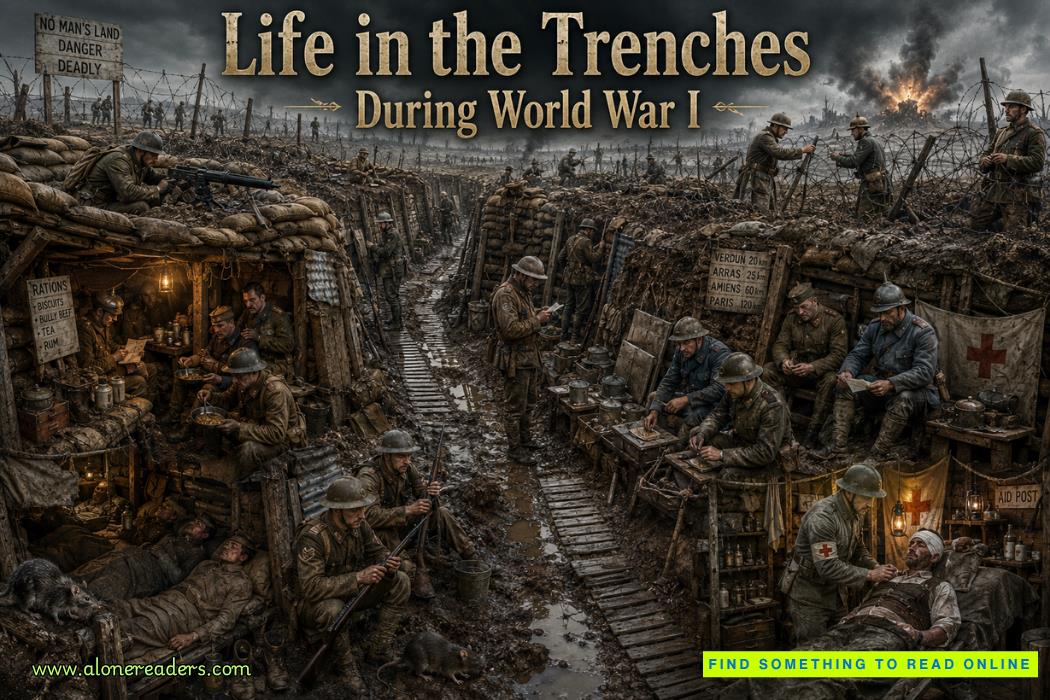
As Marion got older, she noticed other veterans around the city, many of whom were on crutches or in wheelchairs. But there were others, more difficult to discern, like her father, who either stood like statues or wandered aimlessly, shouting at shadows. Even now, more than twenty years later, her father sometimes went days without speaking to anyone. It was obvious to Marion that the war might be over, but her father still fought the enemy.
As a daughter, Marion was concerned but reluctantly accepting of his strange ways.
As a psychiatrist, she was intrigued. She wanted to know more. Her body might have failed her when it came to working in the emergency room, but her brain never gave up. As soon as her fever broke in her hospital bed and she was able to think clearly, she dove into her psychiatry textbooks and graduated at the top of her class.
In the end, she’d surprised herself by how much she enjoyed studying psychiatry. The field had undergone so much change over the past twenty years, moving from drastic, often violent “treatments” to very interesting talk- and medicine-based care. There were many new, effective therapies and drugs available now, and she was fascinated by it all.
Marion spent whatever spare time she could find studying surgical procedures and attending classes as an auditor, keeping on top of everything she would need to know if the opportunity to get her hand on a scalpel ever arose again. Near the corner of Jarvis and Isabella, Marion arrived at the white-brick apartment building she called home, its lawn brightened by two forsythia bushes in full bloom. Blossoms of all kinds had awakened throughout the city, like the daffodils and crocuses popping up in greening yards. She stepped past a cheerful cluster of candy-apple-red tulips along the front walkway then reached for the door. The hinges groaned as she pulled it open, a sound so familiar it had almost come to feel like a greeting. Inside the entry on her right was the mail room, but she walked past without looking. It was Victoria Day—Queen Victoria’s birthday—so no delivery today. At the bank of three elevators, she pressed the button. When the one on the left arrived with a rattle and a clunk, she pressed 5 then leaned against the back wall, riding the familiar rocking motion of the box as it climbed.
Marion had never been entirely comfortable with the elevator, or with heights themselves. Originally, she had asked the building manager if he had any apartments available on a lower floor. He didn’t, but at least she wasn’t up top, on the eleventh storey. Over time she adjusted to the altitude, even come to enjoy the decadent solitude the balcony provided. From her apartment halfway up 105 Isabella Street, she could hear the honking of cars and the occasional shout bouncing off walls, but they were distant. Especially at night.
At the fifth floor the elevator lurched to a stop, and Marion felt the oddly pleasant sensation of her stomach rolling with it. She stepped into the hallway and turned toward her apartment.
The door to her left clicked open then closed.
“Good afternoon,” she said to 509’s door. As usual, there was no response. Marion had never met the mysterious man within, but she had put together a mental image of him: older, solitary, and tight with nerves. Almost every time the elevator arrived, his door opened a couple of inches, then shut. Mr. Snoop—a nickname Marion had given him—either considered himself to be the watchdog of the floor, or he was just plain nosy.
She followed the hallway’s burgundy-coloured carpet and ivory striped wallpaper, somewhat yellowed by the effects of time and cigarette smoke. As she dug her key from her purse, she passed two apartments on either side. At 512, she turned right and unlocked the door, still humming.
“Hi, Chester.” She crouched to greet the black and white cat winding around her ankles. “Did you miss me?”
His response rumbled through his chest, warming her inside.
“You won’t believe what I saw in the park,” she told him, passing the coat closet on her right. “I’ve never seen so many people. They were having a great time.”
Chester gazed up at her, the tip of his tail flicking with interest.
She tossed her purse and briefcase onto the olive-coloured living room couch then walked barefoot across the parquet floor toward the galley kitchen. The apartment was awash in late-day sunlight, bringing to life the tiny dust motes and cat hair disturbed by her arrival. She considered closingthe floor-to-ceiling drapes, which matched the couch perfectly, but she decided against it. The sun felt good.
She filled Chester’s bowl with cat food then placed it on the floor and stepped back so he could enjoy his meal, and she could pour herself a little wine. She carried the glass to her balcony and sat in one of the two chairs she had bought specifically for out there, admiring the lovely day. Across from her was the neighbouring apartment building. It was similar to this one, but a good distance away, so it didn’t affect her limited view of the city. Between the buildings stretched a park area carpeted by spring grass, edged here and there by bursts of tulips and patches of wilting daffodils. Best of all were the two magnificent cherry trees growing almost directly beneath her, a cloud of white-pink blossoms, offering Marion and her neighbours a soft perfume of lilac with a pinch of vanilla.
Her balcony faced northwest, and the air was warm. She knew the heat would be practically unbearable in the summer, but for now it was perfect. She glanced to her left, admiring the big potted geranium in the far corner, with its mounds of red petals. A gift from her neighbour, Mr. Levin, two weeks before. He’d informed her very seriously that her balcony would be perfect for it. Mr. Levin was very serious about plants in general. He and his wife were lovely people, but she was aware her quiet lifestyle was a topic of conversation between them. On his way out the last time, he muttered something about “If a woman has to live alone, she should at least have plants to talk to.”
Now she took a sip of wine then closed her eyes and turned her face to the sun. She didn’t usually indulge on weekdays, but today was a holiday, and she felt a little inspired by the party in the park.
“Besides, I’m not really alone, am I?” she asked Chester as he strolled outside to join her. He seemed inclined to jump on her lap, but then he spotted an unsuspecting fluff discarded by a poplar tree nearby and chose to pounce on it instead.




She might come out here again tonight around ten, hoping to see fireworks. The Queen’s Park party would probably have moved on before then. She pictured the attendees huddling together in blankets, sound asleep afterthe excitement of the day. Or maybe they were sitting outside the Yorkville coffeehouses, enjoying cigarettes and conversation. It had been a beautiful day. It would be a lovely evening.
In a few hours, her sister would be tucking Marion’s nieces into their beds in the hotel in Montreal, then she and her husband would probably sneak to the bar for a drink.
“Life is to be lived,” Pat had said.
Marion took another sip and gazed over the quiet grounds below. A dog barked in the distance, but she didn’t see any movement. For a heartbeat, she felt like the only person in the city. The only person anywhere, even, and her pulse sped up at the thought. She took a moment to consider her brief reaction, then she asked herself what she asked her patients most days.
How does that feel?
Was she lonely? Was that what she was feeling? Should she be somewhere else with a crowd, having a different sort of fun? Was she missing out?
Or was she just fine on her own?