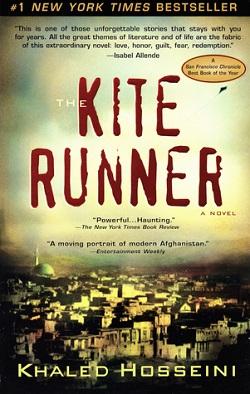
“Ms. Vetiver,” Officer Hayes called, “we’re about to lock up.”
“Of course. Is it all right if I use the bathroom?” Sam realized only as she asked how badly she had to go.
“Sure. Just don’t touch anything.”
In the bathroom, the only room with a door on it, Sam tried not to look at the pink and purple bras on the shower rod, the mini-skyline of toiletries on the counter. An octopus-sized fern stretched fronds toward a skylight, and Sam felt so heavy with sorrow she could barely breathe.Who would take care of the plant? Her dad, Ethan, had died when Sam was six, so she was familiar with death but not with its apparatus. Would Sam have to sign anything, do anything? But she had already done nothing. Now it was too late.




Something buzzed on the counter, making Sam jump: Amelie’s phone, in its bedazzled skull-and-crossbones case, pushing itself around amid the cosmetics as if it wanted Sam’s attention. Sam watched it. It would be wrong to pick it up. Invasive. Probably illegal. Instead Sam reached over and poked it with one finger, flipping it as if it were a rock that might have something nasty underneath. The screen was deeply cracked, as if Amelie had stepped on or thrown it, and on it, beneath a text inviting Amelie to receive $5 off her next noodle bowl, was a stack of messages from somebody Amelie had named MR. DELICIOUS POISON.
Huh, thought Sam. Maybe it hadn’t been mental instability or loneliness but heartbreak. Had Amelie been grieving Mr. Delicious Poison? Was that why she had done it? Sam picked up the phone by the edges and carried it out to Officer Hayes, who was standing patiently in the kitchen with a roll of yellowDo Not Crosspolice tape.
“Sorry, I touched this,” Sam said. “I thought you might need it.”
“Just put it over there,” said Officer Hayes, nodding toward the counter.
Sam thanked him and left the apartment, kissing her fingers and pressing them to where a mezuzah would have lived, had Amelie been Jewish, for protection.
This time Sam used the elevator, and as she cranked the gate closed and hit the black button for the ground floor, she felt so weighted with sadness, in that familiar and despairing way, that she could not move. She descended, the skylight receding above her. Why? Why had Amelie done it? Sam had been told over and over that if somebody really wanted to take her own life, there was nothing anyone could do—that person was the captain of her own soul, and that responsibility belonged to her alone. Still. If Sam had reached out. If she had brought Amelie to group or William’s Darlings. Would that have made a difference?
And . . . what if it hadn’t been Amelie’s choice? Sam was quite sure this wasn’t true. The officers were right about the cause of death. This was an old game Sam was playing with herself because it was easier than the reality. But . . . what if Amelie hadn’t been alone at the end? What if somebody had been with her? What if someone had been sitting on her big wooden bed, nodding kindly and training the gun on Amelie as she took the pills?
Suddenly Sam knew, as surely as if lightning had struck her from the skylight. The human part of her felt terrible about it; the writer nodded and said:Yes. Sam might never know why Amelie had done it, but as the iron cage carried her down through the heart of the building, she knew exactly what to write. Sometimes a novel was a question that in life had no easy answer. It was not what Sam had expected to write; it was neither the rumrunner nor the gold miner; it was a pivot, a complete departure, the greatest literary risk possible. But: The dead writer had just given Sam her next book.
The Rabbit
I know why she died.
The Darling Factor
A Thriller by Sam Vetiver
Book proposal
New York Timesbestselling author ofThe Sharecropper’s DaughterandThe Sodbuster’s WifeSam Vetiver takes an exciting new direction inThe Darling Factor, a thriller that investigates the dark undercurrents of writing fiction—and how literary ambition can turn deadly.
Spanning three decades and multiple settings, from the exclusive ivy-covered writers’ workshop at Triton College to the publishing skyscrapers of Manhattan to tract housing on the wrong side of the tracks,The Darling Factorfollows a group of writers from their graduate school days to the top of the bestseller lists. The Darlings, as the young writers call themselves when they first meet, are tight-knit, competitive, and haunted early by tragedy; halfway through their second year, one of them, a promising prizewinner named Piper, disappears. The Darlings believe it’s suicide—or do they? Piper’s best friend in the program, Cassie Quentin, is never quite sure. She investigates Piper’s death while they are all still at Triton but can turn up no evidence, so she puts the death on her emotional back burner while navigating her career as a contemporary novelist. But when her former graduate school cohort starts dying one by one, Cassie returns to Triton to findout once and for all the answer to the question: Was Piper indeed the first victim? Or is someone else the killer—and why?
Showcasing the psychological deftness and depth of understanding that hallmarks her historical fiction, Sam Vetiver contributes a new layer of insight into the artistic psyche—and how some creatives might do anything, including kill, to keep their own careers alive.
Part II
William
Chapter 16




At the Conference
I’m at a conference when my new paramour calls. Or rather, I am on my bed naked in the hotel room and she sends me a FaceTime request. I am marginally annoyed, as I was busy. But I sign out of the website I was in and take the call.
“Hello, jellybean,” I say. “Where are you?”
A superfluous question, as it is immediately evident Simone is on the Acela. The seat behind her, the triple chime as the train approaches a new stop, the sun and shadows playing over her pretty face as the movement propels her forward. Toward New York. Toward our publisher, although today Simone is not going to Hercules House but to the Southampton Authors’ Luncheon in Long Island, where she is tomorrow’s speaker, a sort of vestigial post-tour event. We’re such a literary power couple. A new experience for me. The reception is sporadic: Simone freezes, unfreezes. Freezes, unfreezes. By my estimation, this means she is somewhere in Connecticut. I have made that trip many times. With my battered brown briefcase on the seat next to me, containing my next bestseller. Whether it’s the satchel or its contents, I have been unbelievably lucky thus far. It has never failed.
“I’m somewhere in Connecticut,” Simone says, pixelating and unpixelating.
“I thought as much,” I say. Again I try to quash my irritation. Whywould she wait to call me until this part of the journey, when the reception is spotty? How inconsiderate. Simone might have called me from Massachusetts. Or better, from her hotel in the Hamptons—although I might not be available to answer then. Regardless, somewhere where she is stable.
“Would you like to see where I am?” I ask, and pan the camera down over my body. I am nude as the day I was born, and my previous activity, the one Simone interrupted, has left me half turgid. My penis rests against my left thigh, still engorged, slightly purple.