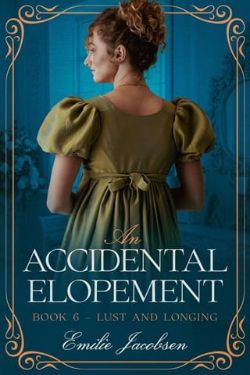
Emilie Jacobsen's novel, An Accidental Elopement, is a delightful foray into the world of Regency romance, a genre beloved for its exploration of societal norms and the intricate dance of courtship. The book introduces us to Cecilia Gaywood and Archie Montagu, two characters who, at first glance, seem destined for anything but a romantic entanglement. Yet, as the narrative unfolds, Jacobsen deftly weaves a tale of unexpected love and personal growth, set against the backdrop of a society where marriage is often more about convenience than passion.
The central theme of An Accidental Elopement revolves around the tension between societal expectations and personal desires. Cecilia, having experienced the sting of unrequited love, resigns herself to a marriage devoid of affection. Her pragmatic approach to matrimony is a reflection of the era's constraints, where women often had limited agency. In contrast, Archie embodies the quintessential bachelor, reveling in his freedom and the pleasures it affords. His initial disinterest in marriage is not merely a personal choice but a rebellion against the societal pressure to conform.
Jacobsen skillfully develops these characters, allowing readers to witness their transformation. Cecilia's journey is particularly compelling as she grapples with her attraction to Archie, a man who represents everything she thought she didn't want. Her internal conflict is portrayed with nuance, capturing the complexity of emotions that accompany a shift from resignation to hope. Archie's character arc is equally engaging, as his interactions with Cecilia force him to reconsider his views on love and commitment. Their evolving relationship is marked by a series of misunderstandings and revelations, each adding depth to their connection.
The writing style in An Accidental Elopement is both elegant and accessible, reminiscent of the works of Jane Austen and Georgette Heyer. Jacobsen's prose is rich with period detail, immersing readers in the Regency era without overwhelming them with historical exposition. Her dialogue is sharp and witty, capturing the social nuances of the time while also conveying the characters' inner thoughts and feelings. This balance between historical authenticity and emotional resonance is a hallmark of the best historical romances, and Jacobsen achieves it with aplomb.
Emotionally, the novel strikes a chord with its exploration of vulnerability and trust. Cecilia and Archie's journey is not just about finding love but also about learning to trust themselves and each other. The emotional impact of their story is heightened by Jacobsen's ability to portray the subtleties of human interaction, from the tentative beginnings of friendship to the deepening of affection. Readers will find themselves rooting for Cecilia and Archie, not just as a couple but as individuals seeking fulfillment in a world that often dictates their choices.
Comparatively, An Accidental Elopement stands alongside other notable works in the Regency romance genre, offering a fresh perspective on familiar themes. While it shares the charm and wit of Austen's novels, it also brings a modern sensibility to its characters' emotional journeys. Fans of Julia Quinn's Bridgerton series will appreciate Jacobsen's ability to blend humor and heart, creating a story that is both entertaining and thought-provoking.
In conclusion, Emilie Jacobsen's An Accidental Elopement is a captivating addition to the Regency romance genre. Through well-drawn characters, engaging prose, and a thoughtful exploration of love and societal expectations, Jacobsen crafts a story that resonates with readers long after the final page. Whether you're a seasoned fan of historical romance or new to the genre, this novel offers a compelling and emotionally satisfying read that is sure to delight.



